

When Leased Equipment Is Part of the Deal
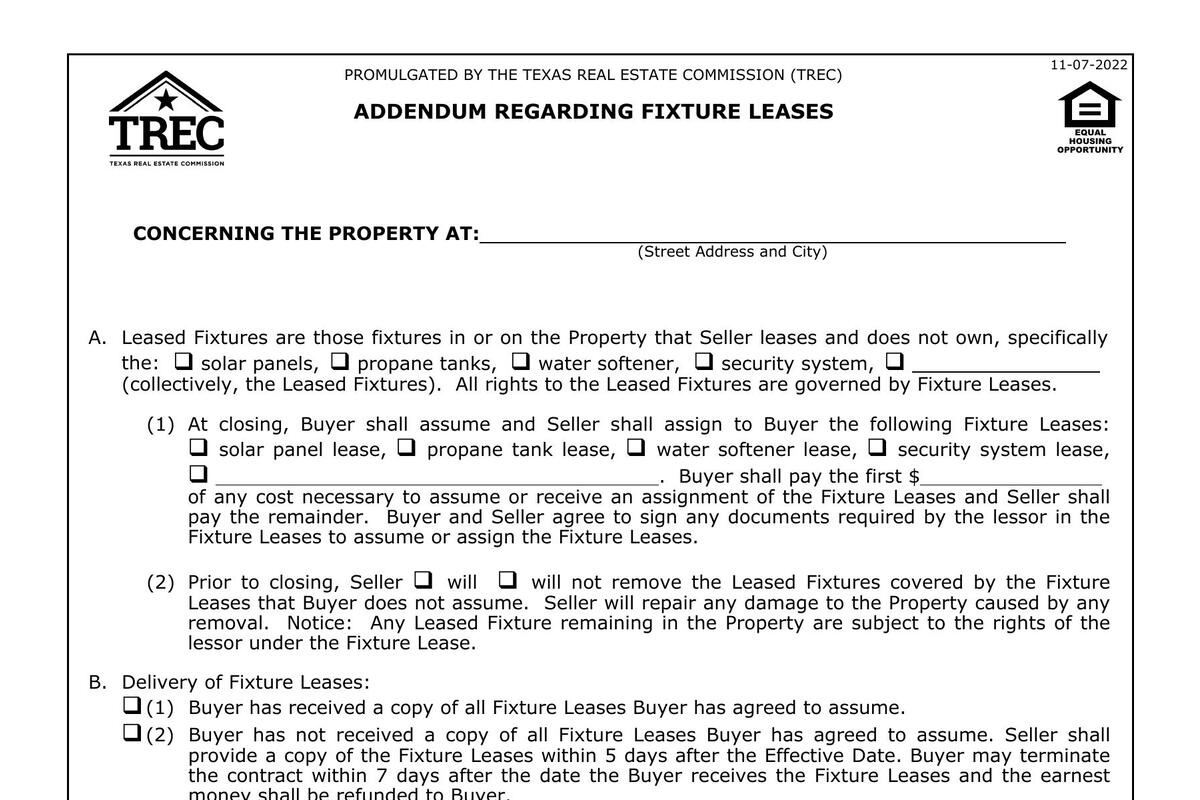
If your property has solar panels, a propane tank, a water softener, or a security system that you lease rather than own, the TREC 52-1 / TXR 1954 Addendum Regarding Fixture Leases gets attached to the contract. It’s how the buyer and seller agree on what happens with that leased equipment at closing.
For a broader overview of how fixture leases affect your sale, see our guide to fixture leases in Texas real estate.
Table of Contents
▼What the Addendum Covers
The form handles three things:
Which leased fixtures are on the property. Paragraph A has checkboxes for solar panels, propane tanks, water softeners, and security systems, plus a blank for anything else. This identifies exactly what’s leased versus owned.
Which leases the buyer assumes. Paragraph A(1) specifies which fixture leases transfer to the buyer at closing. Both parties agree to sign whatever documents the lessor requires to complete the assignment. The cost of the transfer is split — the buyer pays up to a negotiated amount and the seller covers the rest.
What happens to leases the buyer doesn’t assume. Paragraph A(2) addresses whether the seller removes the equipment before closing or leaves it in place. If the seller removes it, they’re responsible for repairing any damage. If it stays, it remains subject to the lessor’s rights under the original lease.
The Buyer’s Review Period
Paragraph B gives the buyer a chance to review the actual lease documents:
- If the buyer already has copies, they check the box and move on.
- If they haven’t received copies, the seller has 5 days after the effective date to provide them.
- After receiving the leases, the buyer has 7 days to terminate the contract and get their earnest money back.
This is why we tell sellers to have their fixture lease documents ready before listing. A buyer who discovers a 20-year solar panel lease with unfavorable terms after going under contract has a contractual right to walk. Better to disclose it upfront and let the buyer factor it into their offer.
What Sellers Should Do
Locate your lease agreements. Dig out the actual documents — not just the monthly payment amount. The buyer and their attorney will want to see the terms, the remaining term, the monthly cost, and the transfer/assumption provisions.
Know the transfer process. Contact your leasing company before you list and ask what’s required to transfer the lease to a new owner. Some are straightforward. Some require credit checks on the buyer. Some charge transfer fees. Know what you’re dealing with so it doesn’t surprise anyone during the transaction.
Disclose on the seller’s disclosure. Every leased fixture should be noted on the seller’s disclosure notice. The addendum handles the contractual terms, but the disclosure is where the buyer first learns about it.
Sell your home for just 1% commission.
Related Guides
Frequently Asked Questions
What is the fixture lease addendum in Texas?
TREC 52-1 (TXR 1954) is an addendum attached to the contract when the property has leased fixtures — equipment that's physically attached to the property but owned by a third-party leasing company. Common examples are solar panels, propane tanks, water softeners, and security systems.
Does the buyer have to assume my fixture lease?
Not necessarily. The addendum specifies which fixture leases the buyer agrees to assume. If the buyer doesn't want to assume a lease, the seller can remove the equipment before closing and repair any damage, or the fixture stays subject to the lessor's rights.
Can the buyer terminate over a fixture lease?
Yes. If the buyer hasn't received copies of the fixture leases, the seller has 5 days after the effective date to provide them. The buyer then has 7 days after receiving the leases to terminate the contract and get their earnest money back.
Who pays for the fixture lease transfer?
The addendum includes a blank for cost allocation. The buyer pays the first $X of any transfer or assignment costs, and the seller pays the remainder. This is negotiated between the parties.
