

The Seller’s (Very Limited) Exit
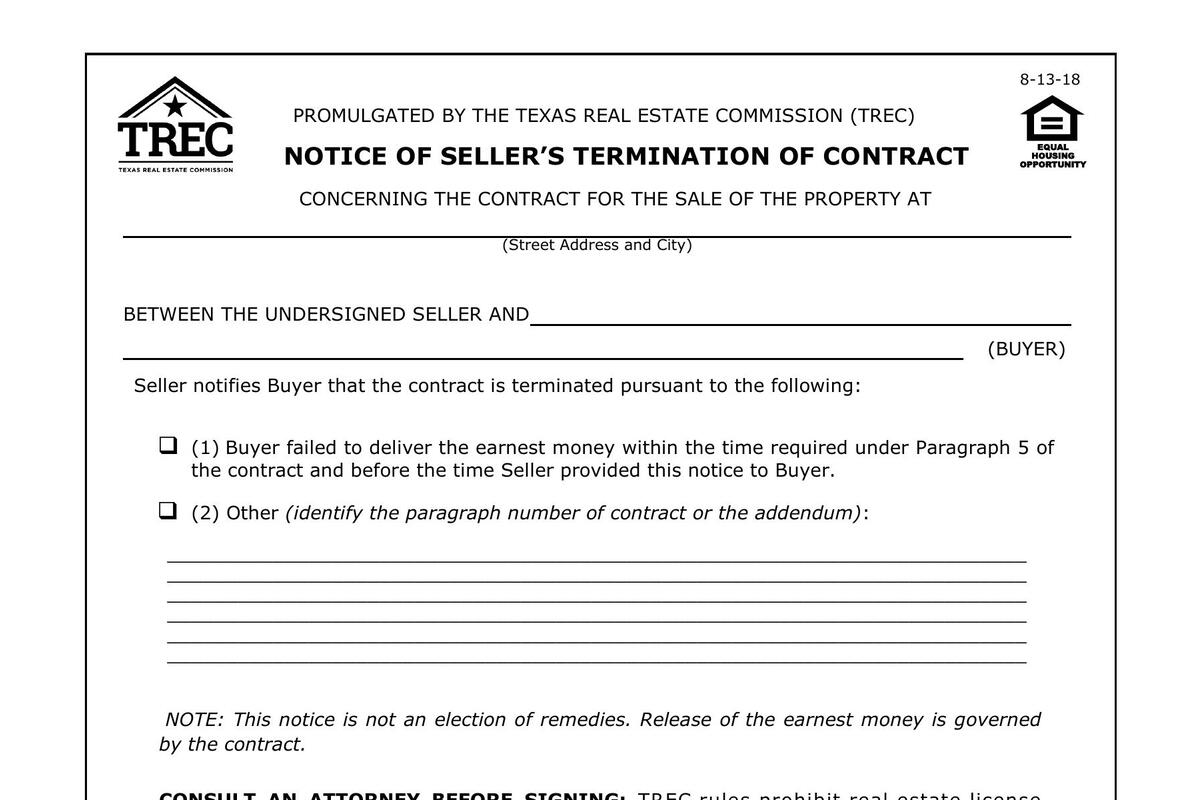
Compare the buyer’s termination form to this one and you’ll see how the contract is structured. The buyer’s form has 8 specific termination reasons with checkboxes. The seller’s form — TREC 50-0 / TXR 1950 — has one.
That’s not an accident. The Texas residential contract gives buyers significantly more contractual exits than sellers. As a seller, once you sign the contract, your outs are narrow.
Table of Contents
▼What’s on the Form
The seller’s termination notice has two options:
Buyer failed to deliver earnest money (Paragraph 5) — the contract specifies when earnest money is due. If the buyer doesn’t deliver it on time and the seller provides this notice before the buyer delivers, the seller can terminate. This is the clearest seller termination right in the contract — and the timing matters. If the earnest money shows up before this notice is delivered, the window closes.
Other — an open-ended blank where the seller identifies a different paragraph or addendum as the basis for termination. This could include buyer default under other contract provisions, but the seller needs a legitimate contractual basis. “I changed my mind” or “I got a better offer” is not a valid entry here.
That’s it. One specific reason and a catch-all. Compare that to the buyer’s 8 checkboxes and you understand why we say the contract is buyer-centric.
What This Form Does NOT Do
Same as the buyer’s version, the form includes this note:
“This notice is not an election of remedies. Release of the earnest money is governed by the contract.”
Terminating the contract doesn’t automatically resolve the earnest money. A Release of Earnest Money (TXR-1904) is still required — signed by both parties and both brokers — before the deposit moves and everyone is released from their obligations.
Why Sellers Rarely Use This Form
Most contract terminations in Texas are initiated by the buyer, not the seller. Sellers terminate when:
- The buyer didn’t deliver earnest money and the seller wants out
- The buyer is in clear default (failed to close, breached a material term)
- Both parties agree the deal isn’t going to work and the seller initiates the paperwork
In practice, even when a seller has grounds to terminate, the preferred path is usually to work through the issue rather than blow up the deal. A terminated contract means back on market, new showings, new buyer, more time — and every week off market costs the seller in holding expenses.
What Sellers Should Know
Your termination rights are limited. Don’t assume you can get out of a contract because you’re unhappy with the buyer, the timeline, or the price you agreed to. You signed a binding contract.
Timing on the EMD is critical. If you’re going to terminate because the buyer didn’t deliver earnest money, do it immediately. The moment the buyer delivers, your right to terminate on those grounds disappears.
Talk to your broker first. Before you sign this form, make sure you have a valid contractual basis. A seller who terminates without grounds is in default — and the buyer can pursue specific performance (a court forcing the sale) plus damages and attorney’s fees.
The ROEM is still required. Even after termination, both parties and both brokers must sign the Release of Earnest Money to disburse the deposit and release everyone from the contract.
Sell your home for just 1% commission.
Related Guides
Frequently Asked Questions
What is the Notice of Seller's Termination?
TREC 50-0 (TXR 1950) is the standard form a seller uses to formally notify the buyer that they're terminating the contract. Unlike the buyer's version with 8 termination reasons, the seller's form has essentially one specific reason — the buyer failed to deliver earnest money on time.
Can a seller terminate because they got a better offer?
No. Getting a higher offer from another buyer is not grounds for termination. The seller is bound by the contract they signed. Terminating without valid contractual grounds puts the seller in default.
Does the seller's termination notice release the earnest money?
No. The form states: 'This notice is not an election of remedies. Release of the earnest money is governed by the contract.' A separate Release of Earnest Money (TXR-1904) is still required.
