

If Your Property Is in a PID, You Can’t Skip This
If you’re selling a home in a Public Improvement District, Texas law requires you to tell the buyer about it — in writing, before closing. This isn’t a suggestion. It’s a statutory obligation under Texas Property Code §5.014, and skipping it gives the buyer legal grounds to back out of the deal or come after you for damages.
PIDs are increasingly common in Houston-area master-planned communities — places like Bridgeland, Harvest Green, and dozens of newer developments. If you bought in one of these communities, there’s a good chance your property carries a PID assessment. Here’s what you need to know before you list.
Table of Contents
▼What a PID Actually Is
A Public Improvement District is a designated area where property owners pay annual assessments to fund specific infrastructure improvements. Think roads, drainage systems, landscaping, street lighting, sidewalks, and similar public improvements that benefit the district.
The developer typically establishes the PID during the initial build-out of the community. The city or county issues bonds to pay for the infrastructure upfront, and property owners repay those bonds through annual assessments added to their tax bill.
Here’s the part that matters for sellers: PID assessments run with the land, not the owner. When you sell, the assessment obligation transfers to the buyer. That’s exactly why disclosure is required — the buyer needs to know what they’re inheriting.
PID vs. MUD — They’re Not the Same Thing
Sellers (and agents) mix these up constantly. They’re different mechanisms that do different things:
- PIDs fund specific improvements — roads, drainage, landscaping, lighting — through assessments. The assessment is tied to a specific bond repayment schedule and usually has a defined end date.
- MUDs (Municipal Utility Districts) are political subdivisions that provide ongoing utility services like water, sewer, and drainage. MUDs levy a separate property tax rate that continues indefinitely.
A property can sit in both a PID and a MUD simultaneously. If yours does, you need to provide MUD disclosure as well. Both are separate requirements under Texas law.
What Texas Law Requires You to Disclose
Texas Property Code §5.014 is specific. Before closing, the seller must provide a written notice to the buyer that includes:
- The property is located in a PID — this sounds obvious, but the notice must explicitly state it
- The assessment amounts — what the buyer will owe annually
- What the assessments fund — the specific improvements covered
- The duration — how long the assessments will continue
- The PID service and assessment plan — or information on how to obtain it
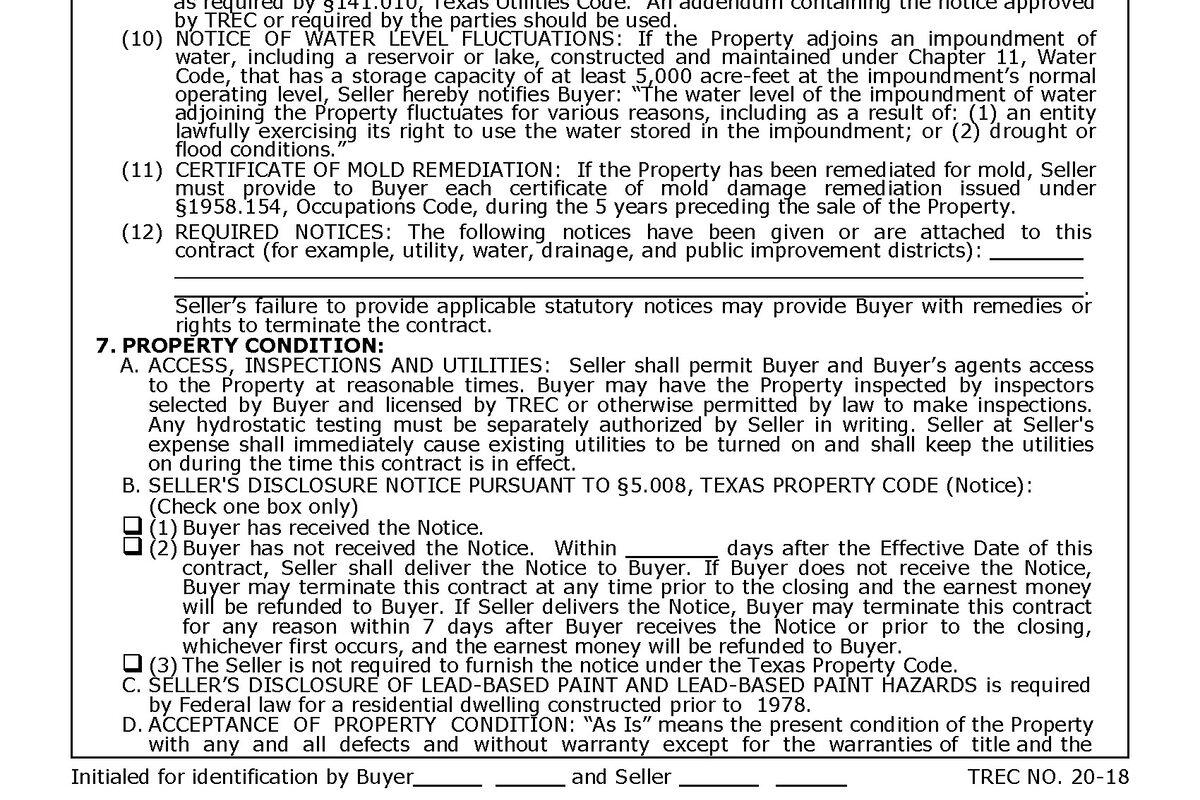
The standard TREC notice form covers PID disclosure, but don’t assume your agent or title company will handle it automatically. Confirm it’s been provided. If you’re selling without an agent, this is on you entirely.
This is part of a broader set of seller disclosure obligations in Texas. PID disclosure isn’t buried in the general seller’s disclosure form — it’s a separate, standalone notice requirement.
Sell your home for just 1% commission.
Where to Find Your PID Information
If you’re not sure whether your property is in a PID — or you need the details for your disclosure — here’s where to look:
- Your closing documents from when you purchased. You should have received PID notice when you bought. Check your title policy and closing packet.
- The county appraisal district. Your property tax statement may show the PID assessment as a separate line item.
- The city or county that established the PID. Most municipalities maintain PID records, including the service and assessment plan, online or through their finance department.
- Your title company. When you list, your title company will pull a title commitment that should identify the PID. But don’t wait for this — know before you list so you can price accordingly.
- Your HOA management company. In many master-planned communities, the HOA management company can point you to the PID administrator.
How PID Assessments Affect Your Sale
PID assessments directly affect the buyer’s monthly payment. Lenders factor PID assessments into the buyer’s debt-to-income ratio just like property taxes and HOA dues. A $3,000 annual PID assessment adds $250/month to the buyer’s qualifying payment.
That means:
- Some buyers won’t qualify for the same price they would on a non-PID property
- Buyers who do qualify may have less room in their budget, which can affect offers
- Pricing your home needs to account for the assessment — comparable sales in the same PID are the most accurate benchmark
This is one of the reasons accurate pricing matters. If you’re comparing your home to properties outside the PID that don’t carry the same assessment burden, you’ll overprice it. Work with someone who understands the local market, or at minimum, pull comps from within the same community. A discount realtor in Houston who knows your area can run comps that account for PID assessments so your pricing reflects what buyers are actually paying.
Common Mistakes Sellers Make
Assuming the title company handles everything. Title companies are thorough, but PID disclosure is the seller’s obligation. Don’t assume it’s been done — confirm it.
Not knowing the assessment amount. “There’s a PID” isn’t enough. The buyer needs the actual dollar figure. Look it up before you list.
Confusing PID assessments with HOA dues. These are separate charges. PID assessments are typically collected through the county tax office. HOA dues go to the management company. Buyers need to know both.
Waiting until the last minute. Provide PID notice early — ideally with the seller’s disclosure package. Dropping it on the buyer days before closing creates friction and gives them a reason to renegotiate or walk.
Not disclosing because “the buyer should know.” It doesn’t matter if the buyer’s agent should have told them, or if it’s on the MLS listing, or if it’s public record. The statute requires written notice from the seller. Period.
The Practical Approach
Before you list, pull together three things: the current annual PID assessment amount, a summary of what the assessments fund, and the remaining term. Put this information in your disclosure package from day one. When a buyer sees a well-organized disclosure that addresses the PID upfront, it builds confidence. When they discover it at the closing table, it kills deals.
If you’re in a PID community and you’re not sure how to handle the disclosure — or how to price around the assessment — talk to someone who’s done it before. This is one of those areas where a small amount of preparation prevents a disproportionate amount of headache.
Sell your home for just 1% commission.
Related Guides
Frequently Asked Questions
What is a PID in Texas real estate?
A Public Improvement District (PID) is a defined area where property owners pay special assessments to fund specific infrastructure improvements — roads, drainage, landscaping, lighting, and other public improvements. PIDs are authorized under Texas Local Government Code Chapter 372 and are common in newer master-planned communities.
How is a PID different from a MUD?
PIDs fund specific improvements like roads, drainage, and landscaping through annual assessments tied to the property. MUDs (Municipal Utility Districts) are political subdivisions that provide ongoing utility services — water, sewer, drainage — and levy a separate property tax. A property can be in both a PID and a MUD at the same time.
What happens if a seller doesn't disclose a PID in Texas?
Under Texas Property Code §5.014, failure to provide written PID notice before closing gives the buyer the right to rescind the contract. The buyer can also pursue damages. It's not optional — it's a statutory requirement.
How much are PID assessments in Texas?
PID assessments vary widely depending on the district and the improvements being funded. Annual assessments can range from a few hundred dollars to several thousand. The amount, payment schedule, and duration are all outlined in the PID service and assessment plan, which is public record.
Do PID assessments ever go away?
Most PID assessments have a defined term — often 20-30 years — tied to the bond repayment schedule for the funded improvements. Once the bonds are paid off, the assessment ends. Some PIDs have ongoing maintenance assessments that continue indefinitely. The service and assessment plan spells out the timeline.
