

A Short Form With a Specific Purpose
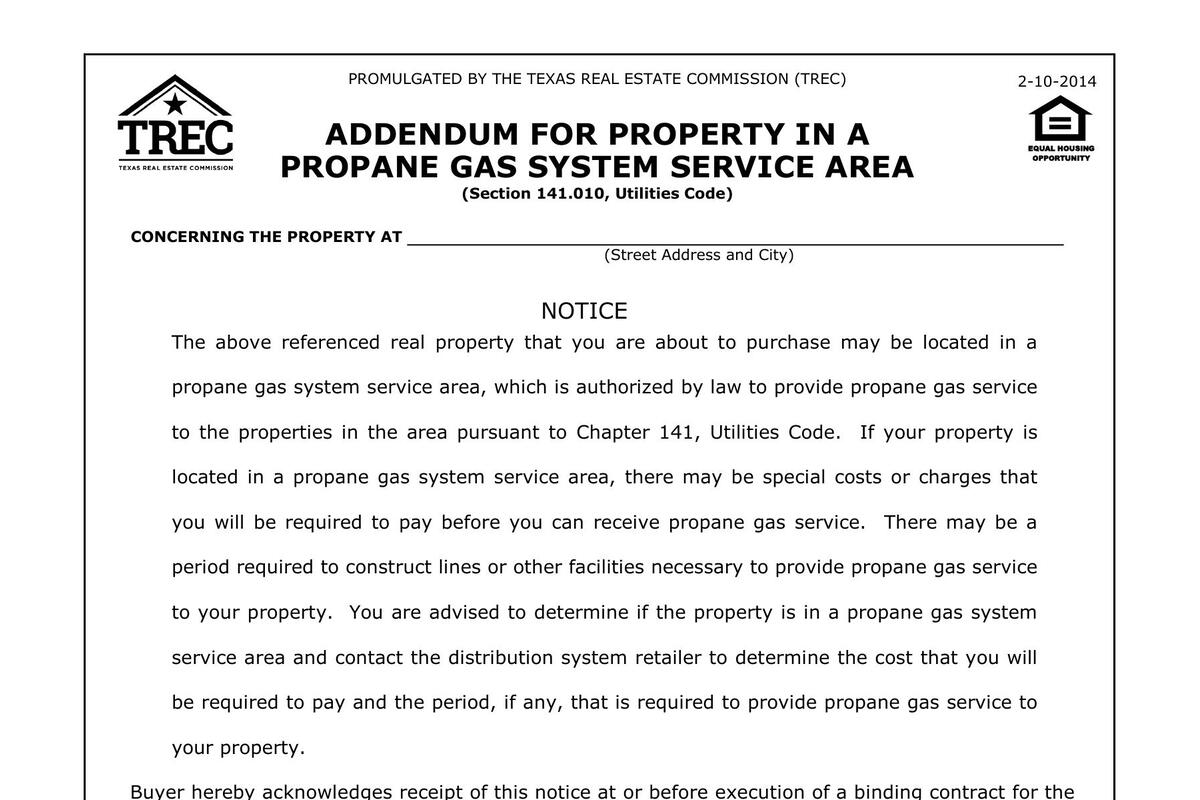
If your property is in a propane gas system service area — common on rural and acreage properties in the Houston metro, particularly in Waller, Montgomery, and Liberty counties — TREC 47-0 is a required addendum to the contract.
It’s one page. The purpose is straightforward: notify the buyer that the property may be served by a propane distribution system authorized under Chapter 141 of the Texas Utilities Code, and that there may be special costs or a construction period required to establish service.
Table of Contents
▼What the Addendum Covers
The notice tells the buyer three things:
- The property may be located in a propane gas system service area authorized to provide propane service under state law.
- There may be costs the buyer is required to pay before receiving propane service.
- There may be a period required to construct lines or facilities to deliver service to the property.
The addendum also requires a copy of the recorded notice from the distribution system retailer to be attached. The seller can get this from the county clerk’s office or directly from the propane provider.
When This Comes Up
This addendum applies to properties outside the reach of municipal natural gas service — typically rural homes, farm and ranch properties, and acreage tracts on the outskirts of the Houston metro. If the property has a propane tank and is served by a propane distribution company rather than a natural gas utility, this addendum is likely required.
It doesn’t come up on most suburban transactions, but on a property in Hockley, Magnolia, Dayton, or similar areas it’s part of the standard paperwork.
Propane Tank vs Propane Service Area
These are two separate issues:
Propane service area (this addendum) — covers the infrastructure and provider. The property is in a designated area served by a propane distribution system.
Leased propane tank — a fixture lease disclosure issue. If the tank on the property is leased rather than owned, that’s disclosed separately under TREC 52-1. The buyer needs to know they’re inheriting a lease obligation on the tank itself.
If your property has both — a propane service area and a leased tank — both the TREC 47-0 addendum and the fixture lease addendum need to be addressed.
What Sellers Should Do
Know your propane provider. Have their contact information ready for the buyer and the title company.
Get the recorded notice. The addendum requires a copy of the notice the distribution retailer recorded in the county’s real property records. Contact your provider or the county clerk’s office to obtain it before you go under contract.
Disclose the tank situation. If the tank is leased, disclose it on the seller’s disclosure and make sure the fixture lease addendum is part of the contract. If the tank is owned, it conveys with the property like any other fixture.
Related Guides
Selling a Home in Houston?
1% listing fee. Full service. No long-term contract.
Frequently Asked Questions
What is the propane gas system service area addendum?
TREC 47-0 is a required addendum for properties in a propane gas system service area. It notifies the buyer that the property may be served by a propane distribution system under Chapter 141 of the Texas Utilities Code, and that there may be costs or a waiting period to establish service.
How do I know if my property is in a propane gas system service area?
If your property uses propane for heating, cooking, or other utilities instead of natural gas, you're likely in a propane service area. Check with your propane provider or the county clerk's office for the recorded notice from the distribution system retailer.
Is this the same as disclosing a leased propane tank?
No. The TREC 47-0 addendum covers the service area itself — the infrastructure and provider. A leased propane tank is a separate fixture lease disclosure under TREC 52-1. If you have both a propane service area and a leased tank, both need to be addressed.
