

When the Buyer Needs to Sell Before They Can Buy
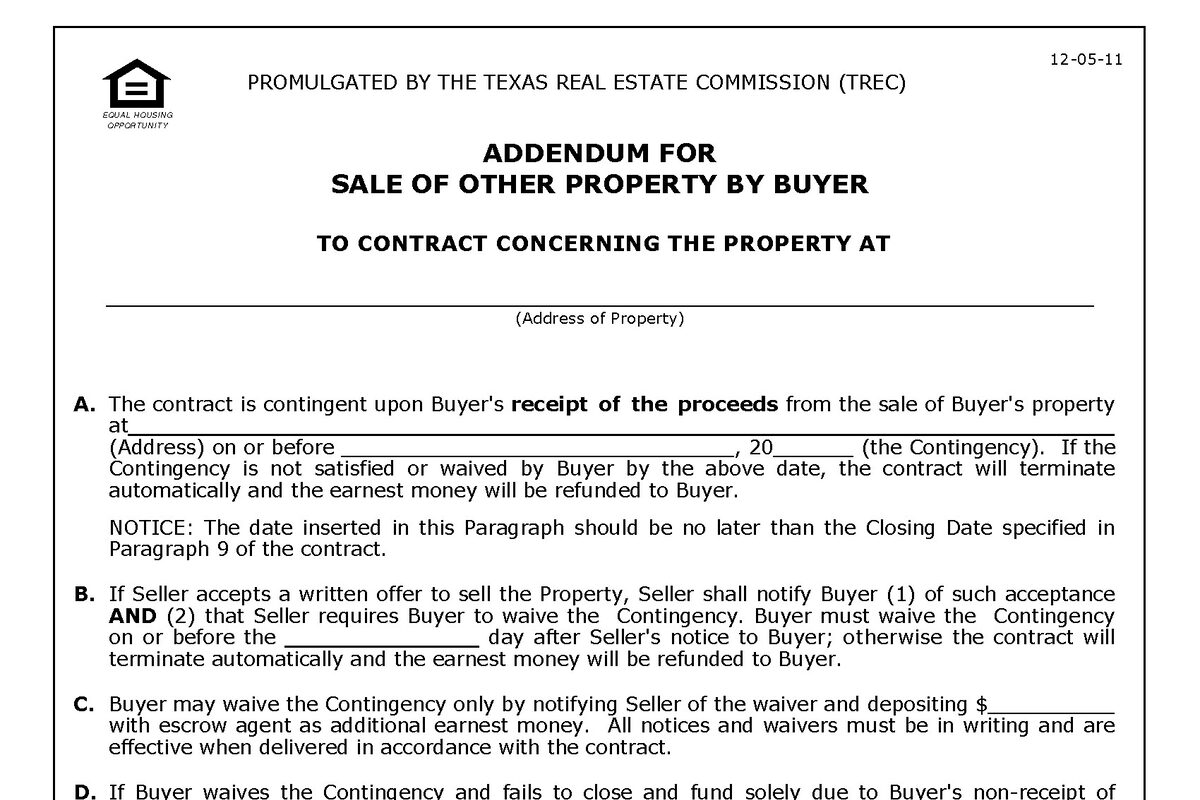
A buyer sends you an offer with the TREC Addendum for Sale of Other Property attached. Translation: they want to buy your house, but they need to sell theirs first.
This is one of the most common contingencies in residential real estate, and it’s also one of the riskiest for sellers. You’re tying up your property on a contract that depends on someone else’s transaction closing — a transaction you have zero control over.
That doesn’t mean you should reject every SOOP offer. It means you need to understand how the addendum works, what protections you have, and when it makes sense to accept one.
Table of Contents
▼How the SOOP Addendum Works
The SOOP is essentially a weak offer addendum. The buyer wants your house but either can’t or doesn’t want to buy it until they sell theirs — usually it’s a can’t. The contract works just like any other executed contract, with two key differences: the buyer can terminate if their property doesn’t sell by the contingency date, and the seller can force the buyer to drop the contingency or walk if any other offer comes in.
There are a few different scenarios depending on where the buyer is in selling their current home:
The buyer’s property is not yet under contract. This is the riskiest scenario for the seller. The buyer hasn’t even found a buyer for their own home yet. You’re waiting on two things to happen — the buyer’s home needs to sell, and then that sale needs to close — before your deal can move forward.
The buyer’s property is under contract but hasn’t closed. Less risky, but how much less depends on where they are in the process. Ask your broker to find out: Have they passed the option period? Is financing approved? Has the appraisal cleared? Every milestone their buyer passes makes it more likely to close. A buyer whose home just went under contract yesterday is a very different risk than one who’s past option, past financing, past appraisal, and waiting on a closing date. You’re not a psychic, but you can gauge the likelihood — and that should inform whether you accept the SOOP and how you structure the kick-out clause.
The buyer’s property has closed. If the buyer’s home has already closed, the contingency is essentially satisfied and the SOOP addendum becomes a formality. This rarely requires the addendum at all — the buyer just closes on yours.
The Kick-Out Clause
“Kick-out clause” is industry slang for what Paragraph B of the addendum does — it’s what agents call it because that’s exactly what it lets the seller do: kick out a SOOP buyer when another offer shows up.
Here’s how it works:
Once you accept a SOOP offer, it’s a live contract — inspections, deadlines, appraisals, everything moves forward just like any other transaction. The listing status changes to Pending Continue to Show, but in practice showing activity drops significantly once a property moves off Active. Most buyers and agents skip past pending listings unless the market is very competitive.
The difference is two things can happen that don’t happen with a normal contract:
- The buyer’s property doesn’t sell by the contingency date. The contract terminates automatically and the earnest money goes back to the buyer.
- You receive another written offer. It doesn’t have to be a better offer — any offer triggers this. You accept the new offer and notify the SOOP buyer, who then has a specified number of days to either waive the contingency and deposit additional earnest money, or walk. If they waive, the contract proceeds without the SOOP condition and they figure out the financing on their own. If they don’t waive in time, the contract terminates automatically.
We negotiate 2-3 days for the buyer to respond. You either can or you can’t — there’s no reason to give a buyer a week to drag things out.
When to Accept a SOOP Offer
Your home has been on the market for a while. If your listing has been sitting for 60-90+ days with limited activity, a SOOP offer with a kick-out clause may be better than an empty house generating carrying costs. Activity was already slow — moving to pending status doesn’t cost you much momentum you didn’t already have.
The buyer’s home is already under contract. If the buyer has a signed contract on their property with a closing date in the near future, the risk drops significantly. Ask for documentation — when was the contract executed, when is the closing date, has the buyer’s buyer passed their option period?
The SOOP offer is strong otherwise. Good price, reasonable terms, solid buyer, and a short kick-out window. If the only downside is the SOOP contingency and everything else is favorable, it may be worth the risk.
You’re not in a rush. If your timeline is flexible and you’re not under pressure to close by a specific date, a SOOP offer gives you a backup plan while you continue marketing.
When to Reject a SOOP Offer
Your market is hot. If you’re getting strong showing activity and expecting multiple offers, accepting a SOOP ties up your property on a contingent deal when you could have a clean contract. In a seller’s market, SOOP offers are at the bottom of the stack.
The buyer’s home isn’t even listed yet. If the buyer hasn’t listed their current home, you’re looking at weeks or months before their sale even starts. That’s too long to wait in most markets.
The kick-out window is too long. A 14-day kick-out window is excessive. If the buyer needs two weeks to decide whether to waive the contingency, they’re not in a position to buy your house right now.
You have a hard deadline. If you need to close by a specific date — relocation, next purchase contingent on this sale, financial pressure — a SOOP adds uncertainty you can’t afford.
Practical Advice for Sellers
Negotiate the kick-out clause aggressively. Three days is standard and fair. Push for the shortest window the buyer will accept. The kick-out clause is your leverage — don’t weaken it.
Understand that showing activity will drop. Once the listing moves to Pending Continue to Show, most buyers and agents move on. The kick-out clause only works if another offer comes in, and that’s harder to generate from a pending status. This is one of the real costs of accepting a SOOP — you lose the momentum of being an active listing.
Verify the status of the buyer’s home. Ask for specifics. Is it listed? What’s the list price? How long has it been on the market? Is it under contract? When does that contract close? The more you know about the buyer’s situation, the better you can assess the risk.
Consider a SOOP as a backup, not a commitment. Mentally, treat a SOOP contract as “I have an interested buyer who isn’t ready yet.” Keep your expectations grounded. If a clean offer comes in, use the kick-out clause. If the SOOP buyer’s home sells and they close, great. If not, you haven’t lost anything because you kept marketing.
Watch the earnest money. A SOOP buyer who puts up strong earnest money is more serious than one who puts up the minimum. Earnest money is the buyer’s skin in the game — the more they stand to lose, the more committed they are.
Don’t stop maintaining the property. Same advice as any contract — the house isn’t sold until the money is in your account and the closing paperwork is done. Keep the lawn mowed, keep the pool serviced, keep the utilities on. SOOP deals fall through more often than clean contracts, and you want to be ready to show the house again at a moment’s notice.
The Honest Take
A SOOP offer isn’t a bad offer — it’s a conditional one. In a balanced or slow market, it can be exactly what you need to get a deal started while you keep your options open. In a hot market, you can usually do better.
The kick-out clause is what makes it workable. Without it, you’re handing the buyer an indefinite hold on your property with no leverage. With it, you maintain control and the ability to pivot when a stronger buyer shows up.
If you’re selling in Houston and want a broker who knows how to evaluate and negotiate contingent offers, get a free market analysis or start your listing.
Related Guides
- Option Period in Texas Real Estate
- Earnest Money vs Option Fee in Texas
- How to Handle Offers When Selling FSBO
- Discount Realtor Houston: Full-Service Listing for 1%
- Release of Earnest Money in Texas
- Terminating a Real Estate Contract in Texas
Selling a Home in Houston?
1% listing fee. Full service. No long-term contract.
Frequently Asked Questions
What is a SOOP in Texas real estate?
SOOP stands for Sale of Other Property. It's a TREC addendum that makes the buyer's purchase contingent on selling their current home. The buyer is saying: I want to buy your house, but I need to sell mine first to do it.
What is the kick-out clause in a SOOP?
The kick-out clause lets the seller continue marketing the property while under contract with a SOOP buyer. If the seller gets another offer, they notify the SOOP buyer, who then has a specified number of days to waive the contingency and commit to closing — or the contract terminates.
Should I accept an offer with a Sale of Other Property contingency?
It depends on your market, your timeline, and the strength of the buyer's overall offer. In a hot market, a SOOP offer is weaker than a clean offer. In a slow market or if your home has been sitting, a SOOP with a solid kick-out clause may be better than no offer at all.
Can I keep showing my house with a SOOP contract?
Yes. That's the purpose of the kick-out clause — the seller continues marketing and accepting showings. If a second buyer makes an offer, the seller can notify the SOOP buyer to either remove the contingency or lose the deal.
How many days does the SOOP buyer get to waive the contingency?
The number of days is negotiable and specified in the addendum. Common timeframes in Houston are 3-7 days. Shorter is better for the seller — it forces the SOOP buyer to make a decision quickly when a competing offer comes in.
