

Selling a Home in Garden Oaks / Oak Forest
Garden Oaks and Oak Forest have become one of Houston’s most popular near-loop neighborhoods over the past decade. What draws buyers is straightforward: mature tree canopy, mid-century homes with character, lots that are bigger than what you find inside the loop, and prices that are more accessible than the Heights or Montrose. The neighborhoods have also developed their own restaurant and retail scene along Ella and Wakefield, adding the walkable amenities that didn’t exist ten years ago.
If you’re selling in Garden Oaks or Oak Forest, here’s what you need to know about this market.
Table of Contents
▼The Garden Oaks / Oak Forest Market
These two neighborhoods function as a connected market, though Garden Oaks generally commands a slight premium. Both neighborhoods share the same general characteristics: 1940s-1960s housing stock, tree-lined streets, and a residential feel that’s becoming increasingly rare this close to central Houston.
The buyer demand is driven by a few things. First, these neighborhoods offer a credible alternative to the Heights at lower prices. A buyer who can’t stretch to $700K for a Heights bungalow might find a comparable home in Oak Forest for $500K. Second, the mature tree canopy and established neighborhood feel are genuine — these aren’t newly developed areas trying to create an identity. Third, the location is strong: you’re close to the Heights, downtown, and the 610/290 interchange gives you access to most of Houston.
The market has matured significantly. Ten years ago, Garden Oaks and Oak Forest were undervalued. Today, prices reflect the demand — but there’s still a value gap compared to inside-the-loop neighborhoods. That gap is what keeps attracting buyers and driving the market.
What Garden Oaks / Oak Forest Buyers Are Looking For
Affordable inner-loop alternative. The core buyer here is someone who wants the feel of an established inner-loop neighborhood without the inner-loop price tag. They’ve looked at the Heights and Montrose, liked what they saw, and discovered that Garden Oaks and Oak Forest offer similar character at a lower entry point.
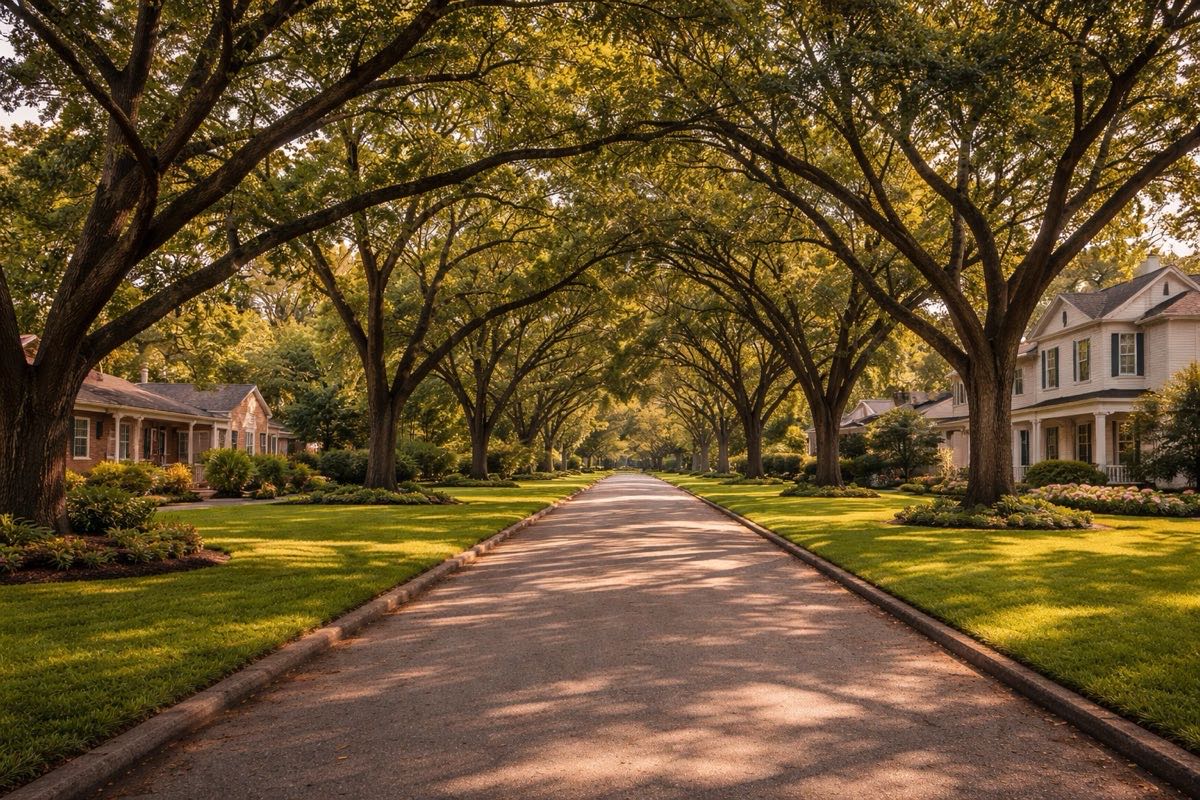
Mature trees and neighborhood character. The tree canopy in Garden Oaks and Oak Forest is one of the best in Houston. Buyers specifically comment on it. Streets lined with mature oaks, established landscaping, and the general feel of a neighborhood that has had time to grow in — these are tangible selling points.
Renovation-ready homes. Many buyers in this market are looking for mid-century homes they can renovate. The 1940s-1960s housing stock provides good bones — solid construction, interesting floor plans, and the potential for a renovation that creates a custom home at a lower cost than buying new.
Garden Oaks Montessori. For families, Garden Oaks Montessori is a significant draw. This HISD magnet school attracts parents who specifically target the area for the school access. If your home is in the school’s zone or transfer area, that’s worth highlighting.
Space. Lot sizes in Garden Oaks and Oak Forest are generally larger than comparable inside-the-loop neighborhoods. Buyers who want a real yard, room for a garage apartment, or just space between houses appreciate this.
Pricing Your Garden Oaks / Oak Forest Home
Pricing in these neighborhoods requires distinguishing between product types. An unrenovated 1950s ranch, a fully renovated mid-century home, and new construction on a teardown lot are three different products with three different buyer pools and price points.
For unrenovated homes, comps should reflect condition honestly. Don’t price your unrenovated home based on what the renovated house down the street sold for. Your buyer is either someone who wants a project or a builder who wants the lot. Price for your actual audience.
For renovated homes, quality matters. A well-done renovation that respects the home’s mid-century character and adds modern functionality prices at the top of the market. A cheap flip with obvious shortcuts will be noticed by buyers in this market — they’re comparing to other renovated homes and to new construction.
Garden Oaks generally prices 10-20% above comparable Oak Forest homes. If your property is in Garden Oaks, make sure your comps reflect that — don’t undervalue by pulling Oak Forest comps.
For a detailed analysis, get a free market analysis for your property. For general pricing guidance, see how to price your home for sale.
Garden Oaks / Oak Forest-Specific Considerations
Deed restrictions vary. Unlike a master-planned community with uniform rules, deed restrictions in Garden Oaks and Oak Forest vary by section. Some sections have active civic clubs that enforce restrictions; others are more relaxed. Know what applies to your property, because buyers will ask — especially about what can be built on adjacent lots.
New construction encroachment. Like many Houston neighborhoods, Garden Oaks and Oak Forest are seeing teardowns replaced with new construction. Some of this is single-family replacement; some involves lot subdivision for townhomes. The impact on your street’s character — and your home’s value — depends on how your immediate surroundings look.
Garage apartments and ADUs. The lot sizes in these neighborhoods often support garage apartments or accessory dwelling units. If your property has one, it adds value — either as rental income potential or as a home office, guest space, or in-law suite. If your lot could support one, that’s worth mentioning too.
No MUD or PID taxes. Unlike many suburban areas, Garden Oaks and Oak Forest don’t have MUD or PID taxes layered on top of property taxes. This is a practical advantage for buyers comparing your property to suburban options.
Walkability improvements. The restaurant and retail development along Ella Boulevard and in the broader area has improved walkability significantly. If your home is within walking distance of restaurants, coffee shops, or the hike-and-bike trail connections, highlight these specifically.
Selling for 1% in Garden Oaks / Oak Forest
Creekstone Real Estate lists Garden Oaks and Oak Forest homes with full-service representation at 1%. Full MLS exposure on HAR.com, Zillow, Redfin, and Realtor.com. Professional photography, accurate pricing, and experienced negotiation.
On a $500,000 Garden Oaks home, listing at 1% instead of 3% saves you $10,000. On a $400,000 Oak Forest home, that’s $8,000.
Learn more about our 1% listing service or request a market analysis for your Garden Oaks or Oak Forest home.
Related Seller Guides
Frequently Asked Questions
What's the difference between Garden Oaks and Oak Forest?
Garden Oaks and Oak Forest are adjacent neighborhoods north of the 610 Loop. Garden Oaks is the smaller, more established area with generally higher prices. Oak Forest is larger with more inventory and a slightly lower average price point. Both share similar characteristics — mature trees, mid-century homes, and a growing renovation market.
How much are homes in Garden Oaks and Oak Forest?
Prices range from the $300Ks for smaller unrenovated Oak Forest homes to $800K+ for renovated or new construction homes in Garden Oaks. The range depends on condition, lot size, and specific location within the neighborhoods.
Are Garden Oaks and Oak Forest inside the loop?
Technically, both neighborhoods are just outside the 610 Loop to the north. However, they're considered 'near loop' and attract many of the same buyers who look inside the loop. The neighborhoods offer a more affordable entry point to inner-loop-adjacent living.
What school options are available in Garden Oaks / Oak Forest?
The area is served by HISD. Garden Oaks Montessori is a popular magnet school that draws families to the area. School zoning and magnet options are a factor for buyers with children.
