

Selling a Home in Midtown Houston
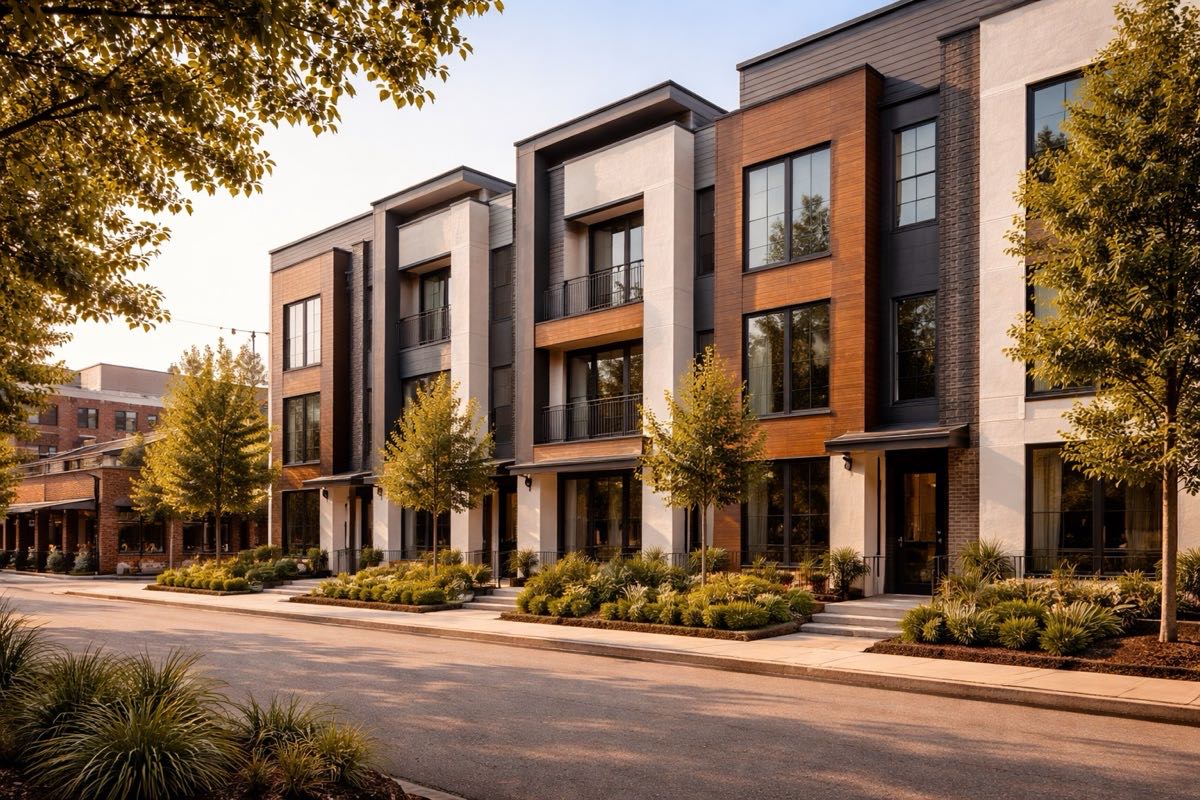
Midtown is Houston’s most urban residential neighborhood. Light rail runs through it. Downtown is a few blocks north. The Museum District and Hermann Park are just south. The bar and restaurant scene along Main, Bagby, and the surrounding streets gives it a walkable energy that most of Houston lacks. The housing stock reflects that urban positioning — almost entirely townhomes and condos, designed for people who want to be in the middle of things.
Selling in Midtown has its own set of dynamics, different from neighborhood markets dominated by single-family homes. Here’s what matters.
Table of Contents
▼The Midtown Market
Midtown’s market is driven by location and lifestyle. The people who buy here want to walk to dinner, take the light rail to work, and live close to everything Houston’s core has to offer. They’re not looking for a yard or a cul-de-sac. They want convenience and urban access.
The buyer pool is distinct. Young professionals who work downtown or in the Medical Center make up the largest segment. Empty nesters downsizing from suburban homes are a growing group — they want low maintenance and proximity to cultural amenities. Investors targeting the rental market are also active, particularly in buildings with short-term rental allowances.
Midtown’s competitive landscape is shaped by new development. New townhome communities come online regularly, and they compete directly with resale product. This means condition and pricing relative to new construction matter more here than in many Houston neighborhoods. A five-year-old townhome with dated finishes at the same price as a new build won’t generate showings.
What Midtown Buyers Are Looking For
Location within Midtown. Not all Midtown blocks are equal. Proximity to the light rail, Main Street, Bagby Street, and Midtown Park matters. Buyers will pay more to be on a quieter street while still being walkable to restaurants and transit. If your property is well-positioned, make sure the listing communicates specific proximity — “two blocks from the Ensemble/HCC rail stop” means more than “in Midtown.”
Parking. In an urban neighborhood, parking is a genuine amenity. A two-car garage in Midtown is worth more, relatively, than in a suburban neighborhood where every home has one. If your property has a garage or dedicated parking spaces, feature it prominently.
Outdoor space. Rooftop decks, patios, balconies — any private outdoor space is a selling point in Midtown where yards are nonexistent. If your townhome has a rooftop deck with a downtown view, that’s a major differentiator.
HOA health and fees. Buyers and their agents will examine your HOA’s financials. Monthly fees, reserve fund adequacy, pending assessments, and any ongoing litigation all affect buyer willingness. A well-managed HOA with reasonable fees is a selling point. A troubled HOA with high fees and low reserves is a problem that shows up in your sale price.
Modern finishes. Midtown buyers skew younger and trend-aware. Updated kitchens, contemporary bathrooms, and good lighting matter. If your property feels dated compared to newer Midtown inventory, it will sit or sell at a discount.
Pricing Your Midtown Home
Midtown pricing is product-specific. Townhomes and condos price differently, and age, finish level, and HOA costs all play into the equation.
For townhomes, your primary comps are other townhomes in Midtown and adjacent areas like Montrose and EaDo. Size, age, garage configuration, and outdoor space (especially rooftop decks) are the main variables. New construction townhomes set the ceiling — if a buyer can get new for $10K more than your resale, you need to adjust.
For condos, the building matters as much as the unit. A condo in a building with a strong HOA, good amenities, and healthy reserves prices differently than an identical unit in a building with financial issues. Buyers’ lenders also evaluate the building — FHA and VA financing may not be available in buildings that don’t meet certain criteria, which can shrink your buyer pool.
Factor in HOA fees when pricing. A $350,000 condo with a $500/month HOA costs the buyer the equivalent of a $425,000 property with no HOA (roughly, in terms of monthly payment). Buyers make this calculation, and so should you.
Get a market analysis that accounts for your specific property type and HOA situation.
Midtown-Specific Considerations
HOA documents matter. When selling a townhome or condo, the HOA resale certificate is required and buyers will review it carefully. Have your HOA’s financials, meeting minutes, and any pending assessment information available. Issues in these documents — special assessments, litigation, underfunded reserves — can kill a deal or force a price reduction.
Light rail proximity. METRORail runs through Midtown and connects to downtown, the Museum District, NRG Park, and the Medical Center. Proximity to a rail stop is a genuine selling point for commuters. It’s also a consideration for noise — homes immediately adjacent to the tracks may need to address that in pricing.
Short-term rental restrictions. Some Midtown HOAs restrict or prohibit short-term rentals (Airbnb, VRBO). Investors and some owner-occupants want this flexibility. Know your HOA’s policy and be prepared to answer questions about it.
Insurance costs. Townhome and condo insurance in Midtown can be complicated. The HOA’s master policy covers common areas and the building exterior; the owner needs an HO-6 policy for the interior. Buyers will ask about insurance costs, and their lender will require specific coverage. Having your current policy information available speeds up the process.
Building age and maintenance. Many Midtown residential buildings are 10-20 years old. Buildings in this age range start needing significant maintenance — roof replacement, exterior repairs, elevator upgrades in mid-rises. If your building has recently completed major maintenance, that’s positive. If it hasn’t and needs to, the HOA may be looking at a special assessment. Buyers will want to know.
Selling for 1% in Midtown
Creekstone Real Estate lists Midtown properties with full-service representation at 1%. Full MLS exposure on HAR.com, Zillow, Redfin, and Realtor.com. Professional photography, market-accurate pricing, and negotiation support — at a listing fee that makes financial sense.
On a $400,000 Midtown townhome, listing at 1% instead of 3% saves you $8,000. On a $300,000 condo, that’s $6,000.
Learn more about our 1% listing service or request a market analysis for your Midtown property.
Related Seller Guides
Frequently Asked Questions
What types of homes sell in Midtown?
Midtown is primarily townhomes and condos. There are very few single-family homes. The product ranges from older condo conversions to newer luxury townhomes, with most residential development occurring in the last 15-20 years.
How do HOA fees affect selling in Midtown?
HOA fees are a significant factor in Midtown because most properties have them. High monthly fees reduce the buyer's purchasing power and can make your property less competitive. Buyers will compare your HOA fee to similar properties — if yours is notably higher, you need to justify it with amenities or services.
Is Midtown a good investment?
Midtown's central location, light rail access, and walkability support long-term value. The area has seen steady development and appreciation. However, condo markets can be more volatile than single-family markets, and HOA health is a factor in resale value.
How long does it take to sell a townhome in Midtown?
Well-priced Midtown townhomes typically sell within 14-30 days. Condos can take longer depending on the building, HOA fees, and competition. Properties with parking, outdoor space, and reasonable HOA fees move fastest.
