

Ending a Real Estate Contract Isn’t as Simple as Changing Your Mind
Once a real estate contract is executed in Texas, both parties are legally bound. You can’t just decide you don’t want to sell anymore, and the buyer can’t walk away without consequences after their termination rights expire.
But contracts do terminate — regularly. Inspections reveal problems. Financing falls through. Title issues surface. When it happens, the process matters. Terminate correctly and you’re protected. Terminate incorrectly and you’re exposed to a lawsuit.
Here’s how termination works, when each party can use it, and what happens to the earnest money afterward.
Table of Contents
▼The Termination Forms
There are two separate termination forms — one for buyers and one for sellers:
Notice of Buyer’s Termination (TREC 38-8 / TXR 1902) — has 8 checkboxes covering specific termination reasons: option period, financing denial, property approval failure, HOA objection, seller’s disclosure objection, appraisal termination, unresolved title/survey objections, and an open-ended “other.” The buyer checks the box that applies and signs.
Notice of Seller’s Termination (TREC 50-0 / TXR 1950) — has essentially one specific reason: the buyer failed to deliver earnest money on time. There’s also an open-ended “other” blank. That’s it. Compare 8 buyer exits to 1 seller exit and you see how the contract is structured.
Both forms include the same critical note: “This notice is not an election of remedies. Release of the earnest money is governed by the contract.” Signing a termination notice ends the contract. It does not release the earnest money. A separate Release of Earnest Money (TXR-1904) is still required — signed by both parties and both brokers — before the deposit is disbursed and everyone is released from their obligations.
Two things that matter more than people realize:
The basis for termination must be cited. Writing “I want to cancel” is not sufficient. The form requires a specific contract provision — option period, financing contingency, title objection, whatever applies. If you can’t point to a paragraph in the contract, you may not have a valid termination right.
Delivery must follow the contract’s notice requirements. The contract specifies how notice is delivered — typically to the other party’s broker at a specific address or email. Verbal notice doesn’t count. A text to the other agent might not count depending on what the contract says. If the termination isn’t delivered properly, it may not be valid, and missing your deadline because of a delivery technicality is an expensive mistake.
When Can a Buyer Terminate?
Buyers have more exit paths than sellers. Here are the common ones.
During the Option Period
The broadest termination right. During the option period — typically 5-10 days in Houston — the buyer can terminate for any reason. Bad inspection, cold feet, found a better house. The buyer paid the option fee for this right, and the option period exists specifically for this purpose.
The buyer must deliver written termination notice before the option period expires. One day late and they’ve lost this right. The option fee is non-refundable. The earnest money gets refunded.
Financing Contingency
If the buyer can’t get their loan approved and provides documentation within the timeline in the Third Party Financing Addendum, they can terminate and get their earnest money back.
This isn’t a loophole for buyer’s remorse. The buyer has to demonstrate they applied for financing in good faith and were denied. A buyer who ghosts their lender and then claims financing fell through is on shaky ground.
Title Objections
The title search reveals a lien, an encroachment, an ownership dispute, or some other defect. The buyer objects within the timeframe specified in the contract. If the seller can’t or won’t cure the title issue, the buyer can terminate.
Seller Default
The seller refuses to close, can’t deliver clear title, or fails to meet a material obligation under the contract. The buyer terminates for cause.
When Can a Seller Terminate?
Sellers have fewer options than buyers. This surprises a lot of people.
Buyer Fails to Deposit Earnest Money
The contract specifies when earnest money is due. If the buyer doesn’t deliver it on time, the seller has grounds to terminate. This is one of the clearest seller termination rights in the contract — and it’s why confirming earnest money delivery in the first 48 hours matters.
Buyer Defaults on Closing
The closing date arrives, the buyer isn’t ready, and there’s no valid extension or contingency protecting them. The seller can terminate.
But there’s a practical wrinkle: most sellers in this situation want to close, not terminate. Terminating means starting over — relisting, new showings, new buyer. If the buyer just needs a few more days for their lender to finish, most sellers grant an extension. If the buyer has genuinely walked away, termination is appropriate.
What Sellers Cannot Do
You cannot terminate because:
- You got a higher offer from someone else
- You changed your mind about selling
- Your neighbor sold for more and you want to relist higher
- The buyer is annoying but hasn’t actually breached the contract
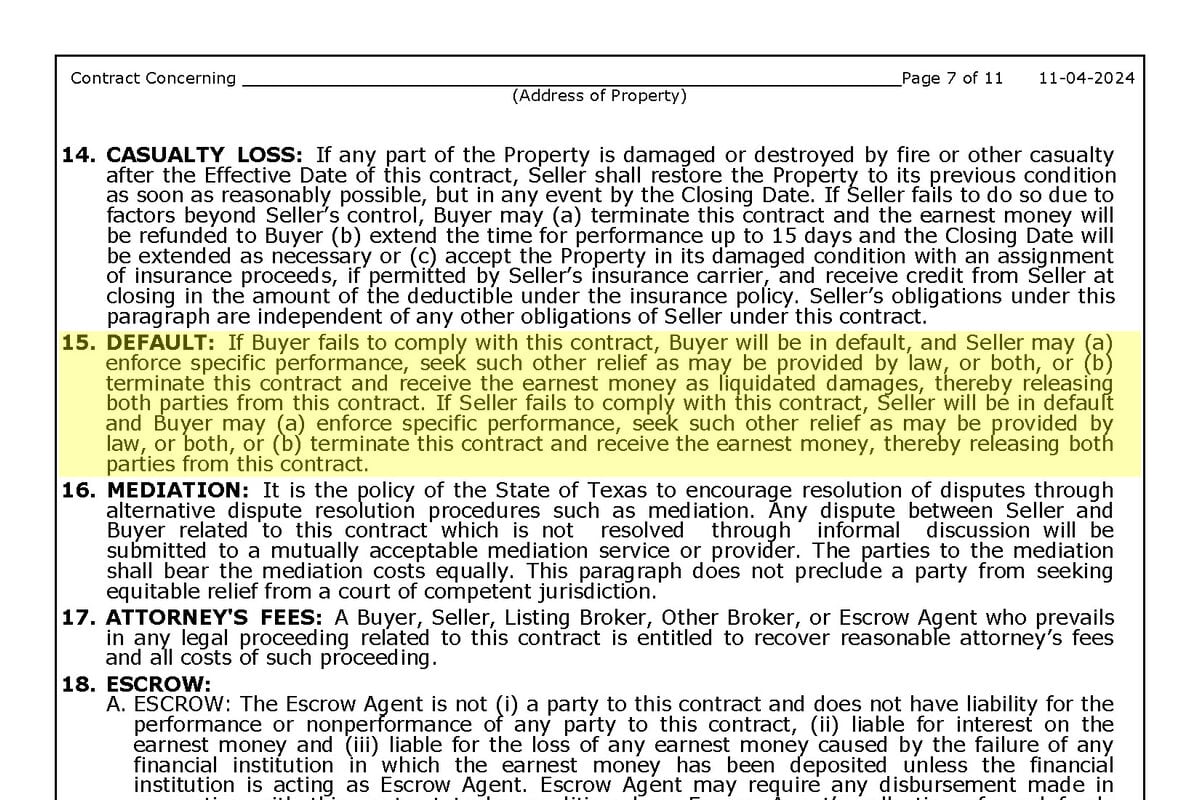
Breaking a contract as a seller is serious. The buyer can sue for specific performance — a court order forcing you to sell the property to them — plus damages and attorney’s fees. This is not a situation where you return the earnest money and call it even. For legal questions about your specific circumstances, talk to a real estate attorney.
When Both Parties Agree It’s Over
Sometimes both parties agree it’s not going to work. The buyer found something they like better. The seller is having second thoughts about the timeline. Repairs can’t be agreed on and nobody wants to fight about it.
When both sides agree, you don’t need a termination notice at all. The Release of Earnest Money (TXR-1904) handles everything — it releases all parties from all obligations under the contract and instructs title on how to disburse the deposit. Sign the ROEM and move on. No separate termination form required.
What Happens to Earnest Money After Termination?
This is where people get confused. Termination and earnest money release are two separate steps handled by two separate forms.
The termination form ends the contract. That’s all it does. It doesn’t say anything about who gets the earnest money.
The Release of Earnest Money determines who gets the deposit. Both parties have to sign it. If they agree, the title company distributes the funds. If they don’t agree, the money sits in escrow until they work it out.
Here’s the general breakdown by scenario:
- Buyer terminates during option period: Buyer gets earnest money back. Seller keeps option fee.
- Buyer terminates under financing contingency: Buyer gets earnest money back, assuming they met the addendum’s requirements.
- Buyer defaults after option period (no valid termination right): This is where disputes happen. How the earnest money gets distributed depends on the circumstances and what both parties agree to on the ROEM.
- Seller defaults: Buyer gets earnest money back and may have additional legal remedies.
- Mutual termination: Whatever the parties agree to — usually the buyer gets the earnest money back.
If the parties can’t agree on the distribution, the title company holds the funds in escrow indefinitely. Resolution usually comes through broker negotiation, mediation, or — in rare cases — litigation.
Practical Advice for Sellers
Don’t panic when a contract terminates. It happens regularly. Most sellers who lose a buyer find another one. The market didn’t change because your deal fell through.
Review the termination with your broker. Was it valid? Was it timely? Did the buyer follow the proper procedure? Your broker can help you understand your options and decide the best path forward.
Get your listing back on the market immediately. Momentum matters. A property that goes from Active to Pending and back to Active quickly reads differently than one that sat in Pending for six weeks. Your broker should reactivate the listing the day the termination is confirmed.
Understand the difference between leverage and liability. Refusing to release earnest money when the buyer terminated properly doesn’t give you leverage — it creates liability. Conversely, releasing earnest money when the buyer defaulted without valid grounds costs you money you’re entitled to keep. This is exactly the situation where your broker earns their fee.
Keep records. Save every termination notice, email, text message, and piece of documentation. If a dispute escalates to mediation, the party with better records wins.
If you’re selling in Houston and want a broker who handles these situations regularly, get a free market analysis or start your listing.
Related Guides
Selling a Home in Houston?
1% listing fee. Full service. No long-term contract.
Frequently Asked Questions
Can a buyer terminate a real estate contract in Texas after the option period?
Only under specific contract conditions — financing denial with proper documentation, unresolved title defects, or the seller's default. After the option period, the buyer's earnest money is at risk if they terminate without a contractual right to do so.
Can a seller back out of a real estate contract in Texas?
Sellers have very limited termination rights. A seller can typically terminate only if the buyer defaults — fails to deposit earnest money, doesn't close on time, or breaches a material contract term. Getting a higher offer from someone else is not grounds for termination.
What form is used to terminate a real estate contract in Texas?
There are two separate forms: the Notice of Buyer's Termination (TREC 38-8 / TXR 1902) and the Notice of Seller's Termination (TREC 50-0 / TXR 1950). Each references the original contract and the specific paragraph granting the right to terminate. The form must be delivered according to the contract's notice requirements.
Does terminating a contract mean I get my earnest money back?
Not automatically. Termination ends the contract. The Release of Earnest Money is a separate form that determines who gets the deposit. Both parties must agree on the distribution — or resolve it through mediation or the courts.
What happens if I terminate a contract without valid grounds?
You could be in default. If the buyer terminates without a contractual right, the seller may be entitled to the earnest money. If the seller terminates without valid grounds, the buyer can sue for specific performance — meaning a court can force the sale — plus damages and attorney's fees.
